
Market 1968 Dime value indicators rely on public auction results from the past 18 months.
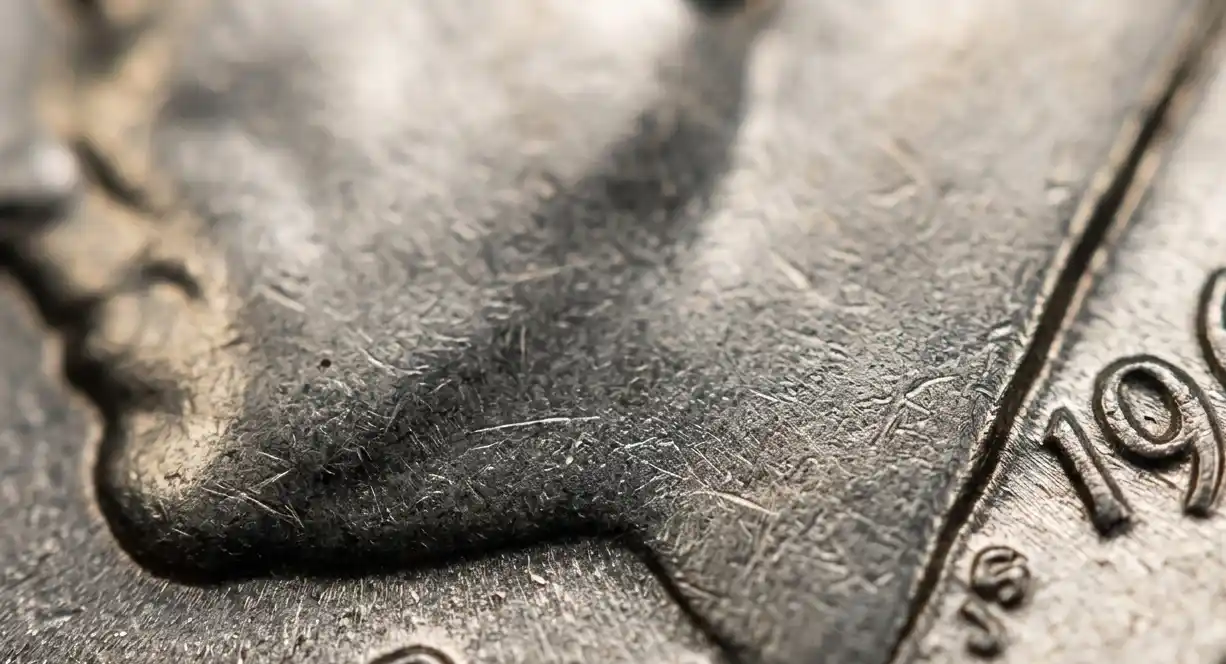
Coin specifications follow the Roosevelt series design.
John Sinnock created the obverse layout in 1946.
Physical properties align with United States coinage laws active during that era.
| Characteristic | Specification |
| Face Value | $0.10 USD |
| Total Weight | 2.27 grams |
| Diameter | 17.91 mm |
| Thickness | 1.30 mm |
| Edge | 118 reeds |
| Core Material | Red Copper |
| Outer Layer | White Copper-Nickel |
Inner copper material ensures the correct electromagnetic signature for vending machines.
Outer nickel plating prevents corrosion during skin contact.
Production Statistics by Mint Facility
Manufacturing efforts during 1968 involved three different facilities.
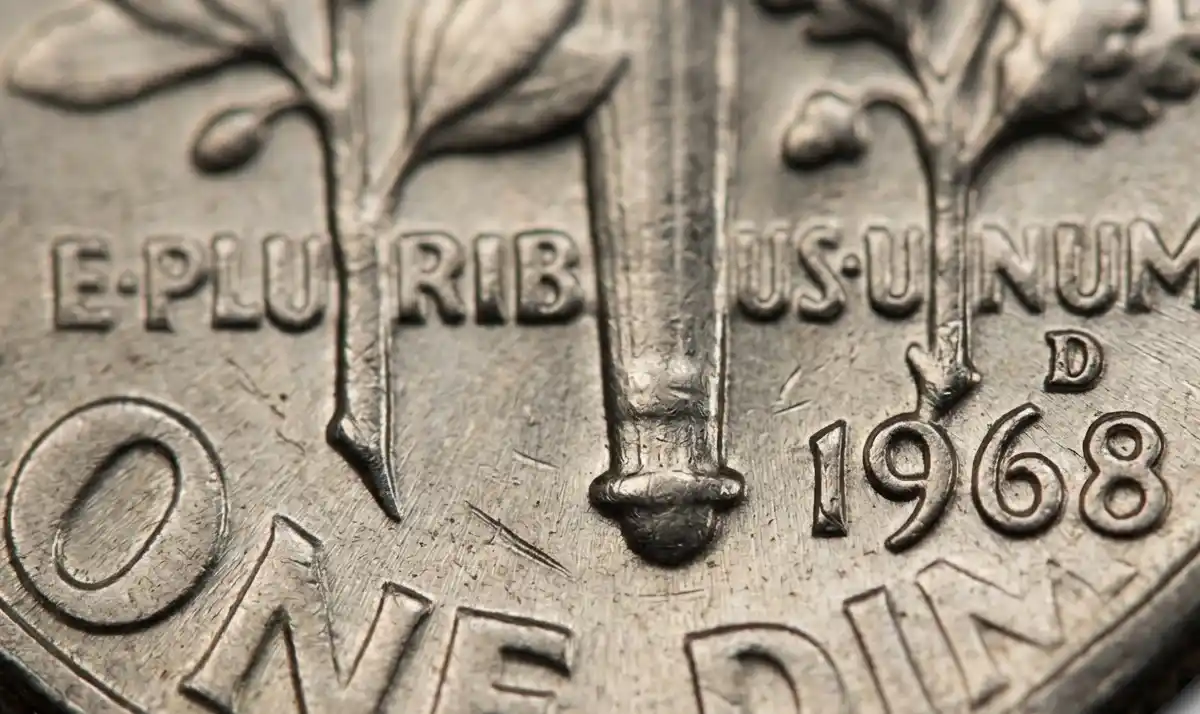
Mint marks appear above the date on the obverse side.
- Philadelphia → No Mint Mark → 424,470,000 units
- Denver → D Mint Mark → 480,748,280 units
- San Francisco → S Mint Mark → 3,041,506 units
Total mintage reached 908,259,786 specimens.
Such high volume prevents any shortage of standard business strikes in 2026.
Pricing Logic and Market Ratios
Value correlates directly with preservation levels on the Sheldon scale.
Circulated coins typically hold no value beyond their face amount.
Specimens graded MS65 and higher show consistent appreciation.
Annual Value Shifts:
- 2023 → 2024: +4%
- 2024 → 2025: +6.5%
- 2025 → March 2026: +3.2%
Increased interest stems from a shrinking supply of original bank-wrapped rolls.
Detailed Breakdown of San Francisco Strikes
Coins bearing the S mark served as Proof set inclusions.
Manufacturing processes required polished planchets.
Double striking by the dies creates a mirror-like field.
Current 2026 Prices for 1968-S:
- PR65 → $4.50 USD
- PR67 → $12.00 USD
- PR69 Deep Cameo → $48.00 USD
- PR70 Deep Cameo → $650.00 USD
Highest recorded prices belong to PR69 DCAM samples.
Heritage Auctions handled a transaction totaling $1,552 USD for this grade.
The Full Bands Factor
Presence of clear horizontal lines on the reverse torch increases valuation.
Numismatists use the FB abbreviation for this trait.
Complete detail execution suggests the use of fresh dies.
Value Cause and Effect: High pressure striking → Sharp torch lines → FB Status → 400% price increase
2026 Price Comparison:
- MS67 Standard: $25.00 USD
- MS67 FB: $115.00 USD
- MS68 FB: $1,850.00 USD
FB status coins represent less than 0.1% of the Denver mintage.
Minting Errors and Defects
Technical failures in 1968 produced rare variations.
These do not constitute legal errors and face confiscation if detected by inspectors.
Entry into circulation happens due to staff oversight.
Error Classification:
- Off-center strikes → $15–$250 USD
- Double strikes → $40–$500 USD
- Missing outer layer → $100–$350 USD
Valuation depends on the percentage of center displacement.
Strikes missing 50% of the center command higher prices than minor shifts.
The 1968-S No S Proof Error
This anomaly stands as the most significant rarity of the year.
Certain dies reached San Francisco without the mint mark applied.
Proof coins lacking the S mark resulted from this error.
| Condition | Market Value |
| PR66 | $12,500 USD |
| PR67 | $18,200 USD |
| PR68 | $24,000 USD |
| PR69 | $38,500 USD |
Only a few dozen such examples exist today.
Identification requires microscopic analysis of the surface texture.
Absence of an S mark on a standard Philadelphia coin is not an error.
Auction Record Dynamics
Sales statistics confirm the investment potential of top-tier grades.
Professional certification from PCGS or NGC remains mandatory for deals exceeding $500 USD.
Significant Sales:
- 1968-D MS68 FB → Sold for $2,415 USD
- 1968 Philadelphia MS67+ FB → Sold for $1,175 USD
- 1968-S PR69 DCAM → Sold for $1,552 USD
Average listing duration on auction platforms dropped to 14 days in 2026.
This trend indicates high asset liquidity.
Environmental Factors Influencing Condition
Copper and nickel alloys remain susceptible to toning.
Storage in high humidity environments causes dark spotting.
Value Loss from Damage:
- Obverse scratches → 70% price reduction
- Chemical cleaning marks → Grade cancellation
- Edge hits → 50% discount
Usage of polyvinyl chloride holders remains prohibited.
Chemical seepage from soft plastic destroys coin surfaces within 5 years.
Verification Procedure
Authenticity checks involve three specific stages.
Measurement accuracy ensures correct classification.
- Weighing on digital scales accurate to 0.01 grams.
- Checking diameter with a caliper.
- Inspecting the field with the coin identifier app free.
Weight deviations exceeding 0.15 grams suggest a counterfeit.
Strongly worn coins provide the only exception to this rule.
Comparison with Surrounding Years
Production totals for 1968 sit below 1967 levels.
Mints produced over 2.2 billion coins in 1967.
Relative Rarity: 1967 → Massive output 1968 → Moderate output 1969 → Decade low output
Reducing production by 60% compared to 1967 failed to make the 1968 dime rare.
Massive survival rates keep prices low for most grades.
Investment Risk Analysis for 2026
Purchasing coins below MS65 grade yields no profit.
Inflationary pressures outpace the value growth of common samples.
Acquisition Strategy: Focusing on MS67 grades or higher. Checking the token with the coin identification. Prioritizing coins with Full Bands certification. Ignoring specimens with artificial oxidation traits.
Finding a rare error in change carries a probability of 1 in 25,000,000.
Professional dealers inspect up to 5,000 coins weekly.
Conclusion
The 1968 dime remains an accessible numismatic item.
Exceptional value exists only for No S errors and MS68 FB specimens.
Standard variations hold value equal to their denomination.
Systematic parameter analysis prevents financial mistakes.
Verifying technical specifications is a fundamental skill for handling these coins.
Data is current as of the publication date.