
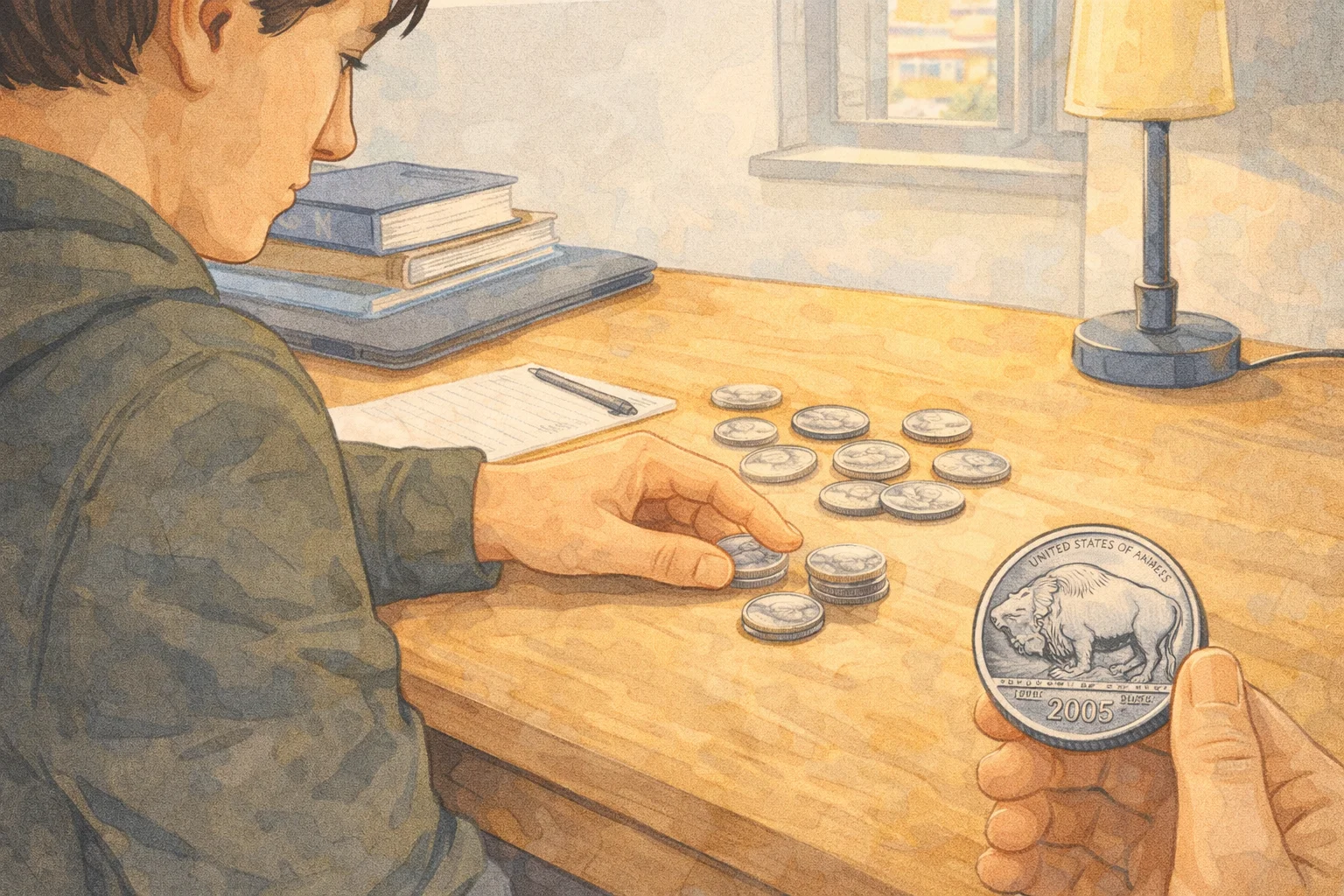
At first glance, the 2005 Buffalo Nickel looks like a modern novelty. It is not silver, not old, and not scarce by mintage. Yet it has earned a lasting place in contemporary numismatics. The reason is simple: this coin combines iconic design revival, a tightly defined historical moment, and one of the most famous modern mint errors ever released into circulation.
Issued as part of the United States Mint’s Westward Journey Nickel Series, the 2005 Buffalo Nickel commemorates the bicentennial of the Lewis and Clark expedition. Instead of introducing an entirely new motif, the Mint deliberately echoed one of the most beloved designs in American coinage history—the Buffalo Nickel of 1913–1938.
That decision changed everything. Collectors who normally overlook modern base-metal coins paid attention. Error hunters followed soon after.
A Design That Bridged Two Eras
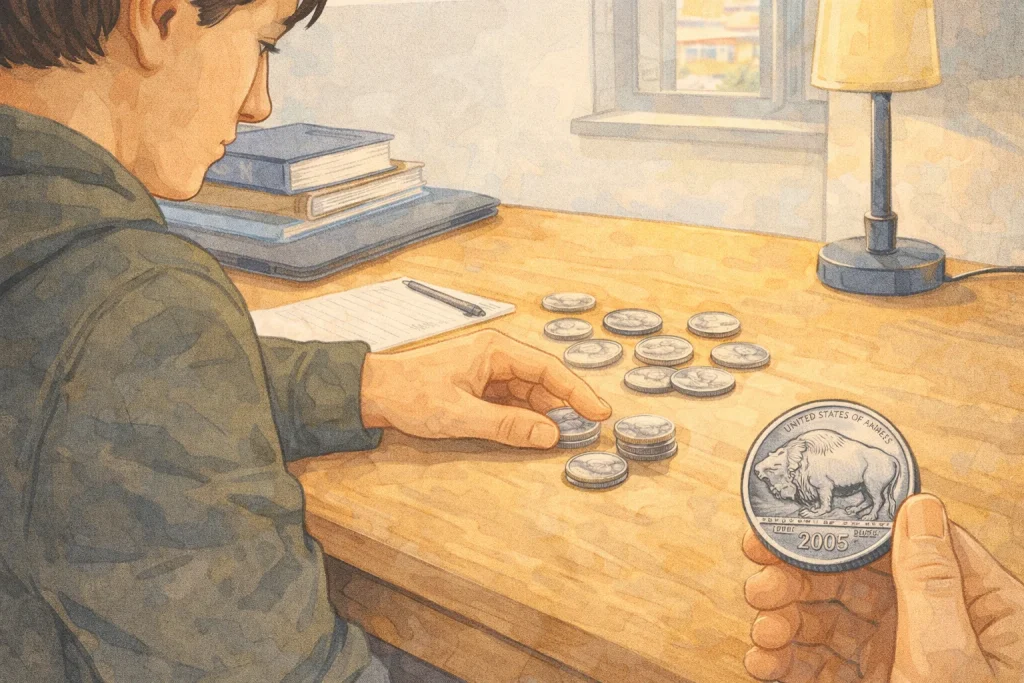
The 2005 Buffalo Nickel uses a modified Jefferson obverse paired with a powerful reverse featuring an American bison. The design was created by Jamie Franki, drawing direct inspiration from the classic Buffalo Nickel while adapting it to modern minting standards.
Key visual elements define this issue:
- a forward-facing Jefferson portrait with handwritten-style LIBERTY
- a simplified but muscular bison standing on a plain field
- minimal background detail, emphasizing relief and line clarity
For collectors, this was not just another circulating nickel but something that deserves an instant check via the coin evaluator when discovered. It was a deliberate callback to a design many consider the most iconic of the 20th century.
The nostalgia factor matters. Coins that reference earlier classics tend to retain attention longer than abstract modern designs.
Mintages and Early Availability
The Buffalo Nickel reverse appeared on nickels struck in 2005 at three facilities:
- Philadelphia (P): approx. 448 million
- Denver (D): approx. 434 million
- San Francisco (S): proofs and special strikes
These are high numbers. Under normal circumstances, such mintages would eliminate any discussion of rarity. Circulated examples remain worth face value, and even many uncirculated pieces trade at modest prices.
Yet something unexpected happened during production. Here the best coin app is essential to gain success.
Why Condition Became a Factor
Despite modern equipment, many 2005 Buffalo Nickels show weak strikes, especially on the bison’s shoulder and back. Contact marks also appear frequently due to high-speed handling.
As a result:
- truly sharp strikes are less common than mintage suggests
- MS65 and higher examples thin out quickly
- MS67 pieces, especially from Denver, show real scarcity
This alone would make the coin mildly interesting. It does not explain four-figure prices.
The real catalyst arrived in the form of a dramatic mint error.
The Error That Changed the Coin’s Status
During production at the Denver Mint, a damaged die created what would become known as the Speared Bison error. A long, straight die gouge runs diagonally across the bison’s back, appearing to pierce the animal like a spear.
This is not subtle. It is bold, raised, and unmistakable.
Collectors value it because:
- the line is straight and sharply defined
- it appears in the same location on confirmed examples
- it is clearly raised metal, not a scratch
Once recognized, the Speared Bison error transformed the 2005-D Buffalo Nickel from a nostalgic modern issue into a headline modern rarity.
Uncirculated examples now trade from $500 to over $2,600, depending on grade and eye appeal.
Why Collectors Still Care
The appeal of the 2005 Buffalo Nickel rests on several layers:
- a historic design revival
- a short, well-defined series
- clear strike quality challenges
- one of the most famous modern mint errors
Unlike speculative varieties, this coin’s story is already written. The error is documented. The market is established. Demand remains steady.
For collectors who enjoy modern issues with real narratives, the 2005 Buffalo Nickel stands out.
The Speared Bison Error and Other Valuable Varieties
The reputation of the 2005 Buffalo Nickel rests on one unmistakable feature: a dramatic mint error that even non-specialists can recognize. Yet the Speared Bison is only part of a broader group of production flaws that give this issue modern rarity status.
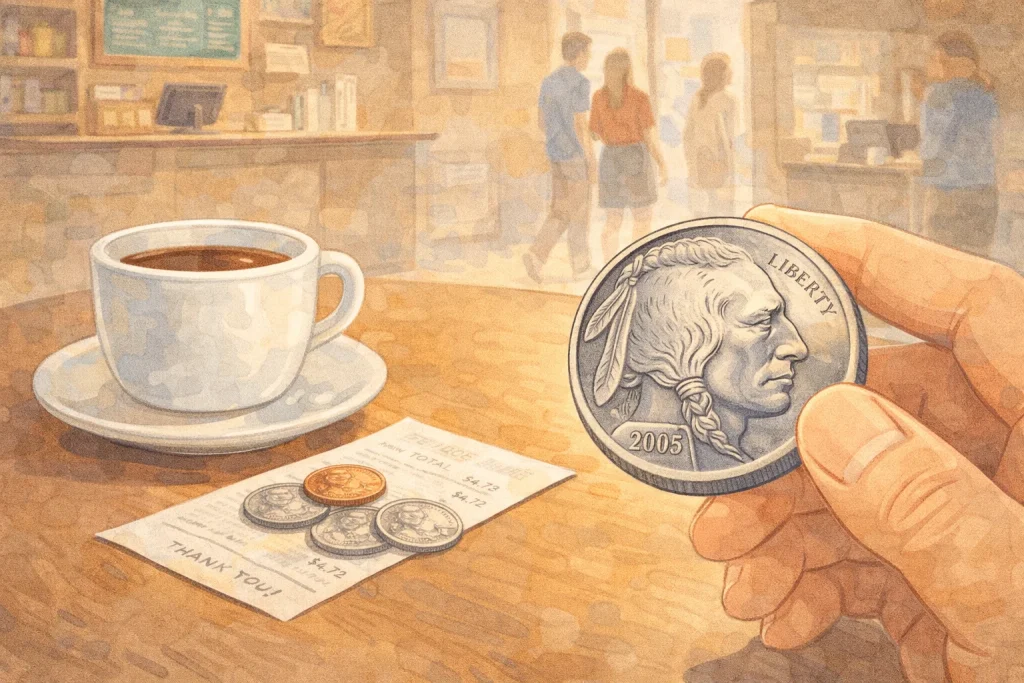
The Iconic Speared Bison (2005-D)
The Speared Bison error occurred when a piece of hard metal debris gouged the working die at the Denver Mint. That gouge transferred onto the coin as a straight, raised line cutting diagonally through the bison’s back.
Key diagnostics collectors rely on:
- a continuous raised line, not incuse
- consistent angle and placement across known examples
- no disruption at the rim, ruling out post-mint damage
Because the mark is bold and easy to confirm, confidence in the error remains high. Market values reflect that clarity.
| Variety | Mint | MS65 | Auction High |
| Speared Bison | D | ~$550 | ~$2,650 |
Higher grades drive premiums quickly. MS66 examples routinely exceed four figures, while top-end pieces set auction records.
Authentication through Professional Coin Grading Service or Numismatic Guaranty Company is strongly recommended at this price level.
Feeder Finger Errors
Another mechanically interesting flaw comes from feeder fingers in the coining press. When these components misalign, they drag across the die face, leaving parallel raised lines on struck coins.
On 2005 Buffalo Nickels, feeder finger errors are seen mainly on Philadelphia issues. Unlike random scratches, these lines are:
- raised above the surface
- evenly spaced
- repeated in the same location
Confirmed examples have sold between $300 and $1,010, with higher prices tied to sharp strikes and minimal contact marks.
Improper Annealing and Surface Anomalies
Some 2005-D nickels show signs of improper annealing before striking. These coins display irregular coloration, often reddish or patchy, caused by uneven metal preparation.
While less dramatic visually, they remain legitimate mint errors. Values tend to start around $100, increasing with grade and eye appeal.
Related surface anomalies include:
- copper-washed appearance with peeling
- localized discoloration tied to planchet preparation
These varieties appeal to specialists rather than general collectors.
Reverse Die Gouges and Minor Errors
Smaller die gouges on the reverse field or near the bison add modest premiums. Typical MS64–MS65 examples trade in the $70–$100 range. While not headline rarities, they round out the error landscape of the issue.
Fast Screening During Hunts
Because many valuable 2005 Buffalo Nickels still appear in rolls, efficient screening matters. Collectors often use Coin ID Scanner to confirm date, mint mark, composition, weight, and diameter from a quick photo before focusing on error diagnostics. This helps eliminate non-matches early and saves time during bulk searches.
Collecting Strategy Today and Why Demand Holds
The 2005 Buffalo Nickel has moved past novelty. Its market is mature, prices are established, and demand is tied to specific attributes rather than hype. Collectors who do well with this issue follow a focused strategy.
How Collectors Find Them
Despite being nearly two decades old, these nickels still surface in everyday channels. Productive methods include:
- searching bank-wrapped rolls, especially Denver issues
- checking mixed nickel boxes from credit unions
- scanning estate accumulations assembled in the 2000s
- trading duplicates at local coin clubs
The Speared Bison error entered circulation before it was widely recognized. Many examples were spent, which limits high-grade survivors today.
When Grading Makes Sense
Grading is not necessary for every coin. It becomes important when value crosses clear thresholds.
Consider certification when:
- a Speared Bison appears uncirculated
- feeder finger lines are bold and uninterrupted
- surfaces show minimal contact marks
At this level, authentication by Professional Coin Grading Service or Numismatic Guaranty Company anchors value and improves resale confidence. Lower-grade examples can still trade raw without issue.
Special Strikes and Proofs
San Francisco produced Special Strikes and proofs that show stronger luster and cleaner surfaces than circulation coins. While these do not carry the Speared Bison error, they add a premium tier for collectors who value finish.
Top Special Strikes in perfect grades have exceeded $6,000, driven by low survival at SP70 rather than error appeal. This gives the series breadth: one side focused on errors, the other on perfection.
Managing a Modern Error Set
Organization matters with modern issues. Many collectors track finds digitally using Coin ID Scanner, which helps confirm specifications and store images and notes for each coin. This is especially useful when comparing annealing anomalies or verifying feeder finger patterns across multiple pieces.
Why the 2005 Buffalo Nickel Endures
Several factors keep this coin relevant:
- a direct link to a classic American design
- a short, well-defined commemorative context
- one of the most recognizable modern mint errors
- attainable entry points alongside high-end trophies
Unlike speculative modern releases, the 2005 Buffalo Nickel’s story is complete. The error exists. The supply is known. The market is active.
Modern rarities are rare because most modern coins offer no reason to care. The 2005 Buffalo Nickel breaks that rule. It connects past and present, delivers a dramatic and verifiable error, and rewards careful searching without requiring deep pockets.
For collectors who enjoy modern coins with real narratives and proven value, few base-metal issues deliver as consistently as this one.